Fashion Elements
Lindy Organizer: Taming the Graceful Slouch
Lindy Organizer: Taming the Graceful Slouch
Couldn't load pickup availability
With its distinctive curved silhouette, two short handles, two longer shoulder straps, and that iconic, almost reversible shape, the Lindy is the most casual, relaxed, and functional bag in the Hermès stable. It is designed for movement—for a day of travel, a busy afternoon of errands, or a weekend getaway. But this kinetic energy presents a unique challenge. The Lindy’s genius is its slouch. Its weakness is its lack of structure. This is where the Lindy Organizer enters the conversation—not as a tool to fight the bag’s nature, but as a partner to perfect it.
-
The Dual-Zip Opening: Unlike the Birkin’s open top or the Kelly’s flap, the Lindy closes with a wide, curved zipper that runs across the top. When unzipped, the opening "blooms" open, allowing remarkable access. When zipped, the bag cinches together, pulling the wings inward. This zipper is structural.
-
The Two Sets of Handles: The Lindy has two short, rigid handles for hand or crook-of-arm carry, and two long, flat shoulder straps for shoulder or cross-body wear. This versatility means the bag is constantly shifting orientation—from upright to sideways to dangling.
-
The Soft Leathers: Lindys are almost exclusively crafted from supple, unstructured leathers like Clemence, Swift, and Evercolor. These leathers are a dream to touch but have no inherent rigidity. They are designed to slouch, puddle, and move.
The result is a bag that is a joy to carry but a nightmare to organize. Without intervention, the interior is a deep, dark, floppy cavern. Items slide under the wings. The bottom sags unevenly. And because the bag is often worn cross-body, everything inside shifts and tumbles with every step.
The Three Pillars of the Lindy Organizer
A well-designed Lindy organizer is not about forcing the bag into a rigid, Birkin-like box. That would be a betrayal of the Lindy’s spirit. Instead, a great organizer works with the bag’s kinetic nature to enhance its functionality while preserving its characteristic slouch.
1. Bottom Support Without Over-Structuring
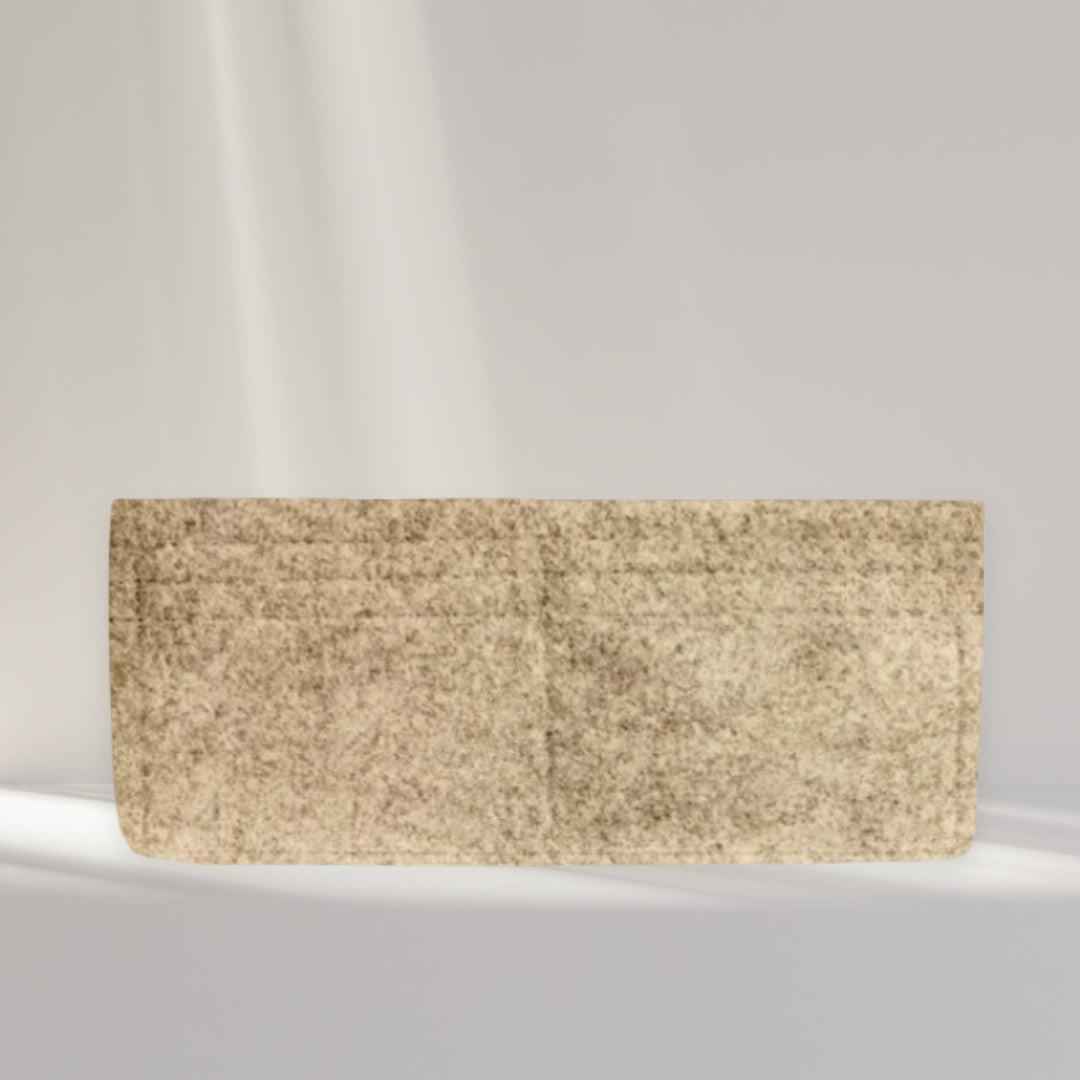
The Lindy’s most common structural issue is a sagging, drooping bottom, especially in the larger 30cm and 34cm sizes. Over time, heavy items cause the soft leather base to stretch and lose its shape. A Lindy organizer provides a firm, flat base panel that sits discreetly at the bottom of the bag. However, unlike a Birkin organizer, the side walls of a Lindy organizer are typically shorter and more flexible. This allows the bag’s famous "wings" to still fold and move naturally while the bottom remains flat and protected. The goal is a supported base, not a rigid box.
2. The Anti-Black-Hole Effect (Organization)
Because the Lindy is a deep, zippered crescent, finding a small item at the bottom can require a full archaeological dig. A dedicated Lindy organizer transforms this chaos into order. It typically features:
-
A zippered central compartment for valuables like a passport or cash.
-
Multiple open slip pockets sized for a smartphone, sunglasses case, or a small pouch.
-
Elastic pen loops and card slots along the interior walls.
Crucially, these pockets are positioned so that they do not interfere with the bag’s ability to zip closed. The organizer essentially gives the Lindy the internal architecture it was missing from the factory.
3. Protection During Motion
The Lindy is a bag that moves. It swings. It shifts. It gets placed on airport floors and café chairs. This constant motion means the unlined leather interior is subjected to continuous friction from the bag’s contents. A Lindy organizer acts as a full-coverage liner, preventing keys from scratching, pens from marking, and loose change from denting the delicate leather. It absorbs the kinetic energy of your belongings so your bag does not.
The Sizing Challenge: Lindy 26, 30, and 34
The Lindy comes in three primary sizes (the Mini Lindy is a separate, more structured case), and each requires a different organizer philosophy.
-
Lindy 26: The most popular size. It is compact yet deceptively spacious. An organizer for the 26 should be lightweight and minimally structured. The goal here is organization and protection, not shape retention. A microfiber or thin felt (1.5mm) is ideal.
-
Lindy 30: The "Goldilocks" size. It has enough volume to slouch beautifully but enough heft to benefit from a more rigid base. A 2mm felt organizer with slightly higher side walls works well here, providing tangible bottom support while still allowing the wings to fold naturally.
-
Lindy 34: The travel tote. This large bag is most prone to bottom sag and shape distortion. A thicker felt organizer (2.5mm to 3mm) with a reinforced base is often recommended. However, be mindful of weight—the bag itself is already substantial.